
By Sabina Varga, independent content marketing strategist
Workplace writing has never been more central to how businesses operate, as most knowledge workers now spend more hours writing and reading than they do in meetings. And it has never been more automated. The result, according to my 2026 Writing at Work survey, is that today’s workforce produces and consumes more text than ever, with less agreement than ever about what makes any of it good.
In April 2026, I ran a survey to understand how the professionals around me felt about writing at work: habits, challenges, business implications, and opportunities for improvement. 71 people answered, and this article outlines the main insights from the data.
Key findings:
- Writing is a meaningful part of work: Almost 58% spend 6+ hours/week writing, and 64% spend 6+ hours/week reading at work. Writing is dominated by short-form, high-frequency formats.
- People see the value of writing, but lack guidance: 87% of respondents believe good writing improves business performance, yet 80% say teams have no shared standard for what that means.
- AI is widely used, but not fully trusted: 79% now use AI tools to write, but their average confidence in the output is just 3 out of 5.
- Professionals dislike sloppy writing and over-polished texts equally.
The sample of this survey is senior (84% have 11 or more years of experience), well-educated (96% hold a bachelor’s degree or higher), and concentrated in knowledge-work industries: technology, marketing, finance, media, communications, and consulting. While it’s not representative of the entire workforce, it reflects common challenges around writing and opportunities for individuals and businesses to improve.
Below are the main findings with explanations and takeaways.
Knowledge workers spend long hours writing (in a rush)
Across the sample, 57.8% of respondents spend six or more hours per week writing at work, with 32.4% spending more than ten.
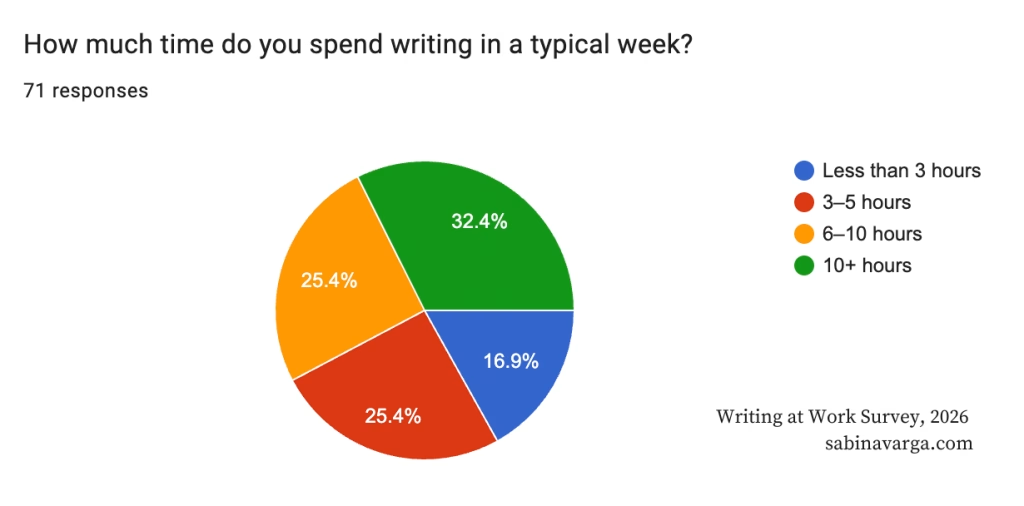
The writing itself is dominated by short-form, high-frequency formats. Most professionals are not crafting long-form pieces but producing a continuous stream of small, operational communications under time pressure.
Email is near-universal (91.5% write it regularly), followed by chat messages (80.3%), internal documents (63.4%), presentations (56.3%), social media posts (54.9%), and external content (52.1%). Roughly 80% report feeling rushed when writing at least sometimes, and 43.7% feel rushed often or very often.
Reading at work is even heavier: 63.8% spend six or more hours per week reading work-related material, with nearly a third exceeding ten hours.
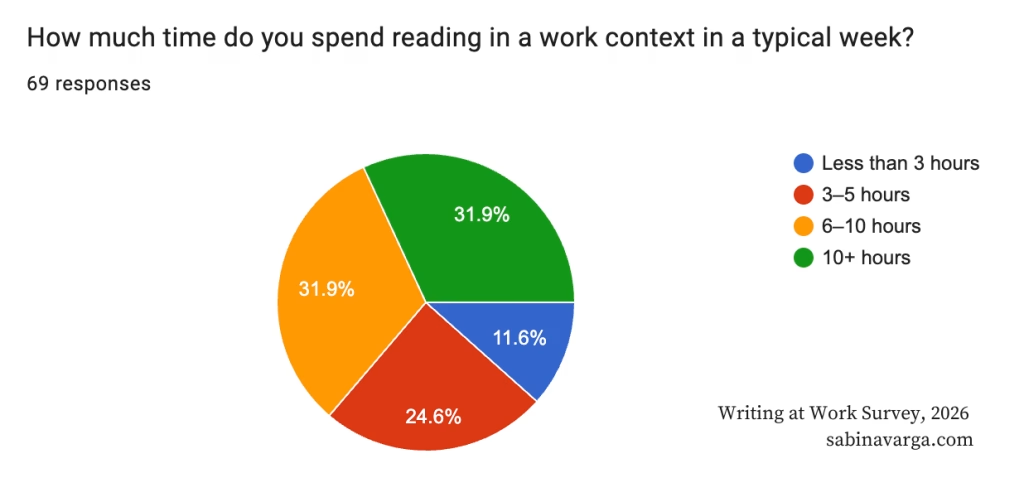
This shows that workplace writing is not a peripheral skill performed occasionally. For most knowledge workers, it is the primary means of communication and collaboration. As a result, the efficiency of this activity will have a direct impact on the business.
The biggest writing problems
Asked to name their three biggest writing challenges, respondents pointed overwhelmingly to problems of judgment and structure. The top issues were:
- Text gets too long (42.3%)
- Hard to get started (36.6%)
- Not persuasive enough (29.6%)
- Lack of clarity (25.4%)
- Tone is off (23.9%)
- Poor structure (21.1%)
- Lack of confidence (21.1%)
In a similar survey I ran in 2020, respondents mentioned a lack of conciseness, creativity, and clarity as the main writing challenges. These problems persist, but persuasiveness and indecisiveness move higher on the list.
Business consequences of inefficient writing
80% of respondents estimate that they lose at least one hour per week to inefficient writing — their own or others’. More alarmingly, 30% lose four or more hours per week.
In other words, across a working year, that adds up to an average of 1 to 5 full working weeks lost annually per person due to inefficient writing. Multiply that by team or workforce, and the waste is too big to ignore.
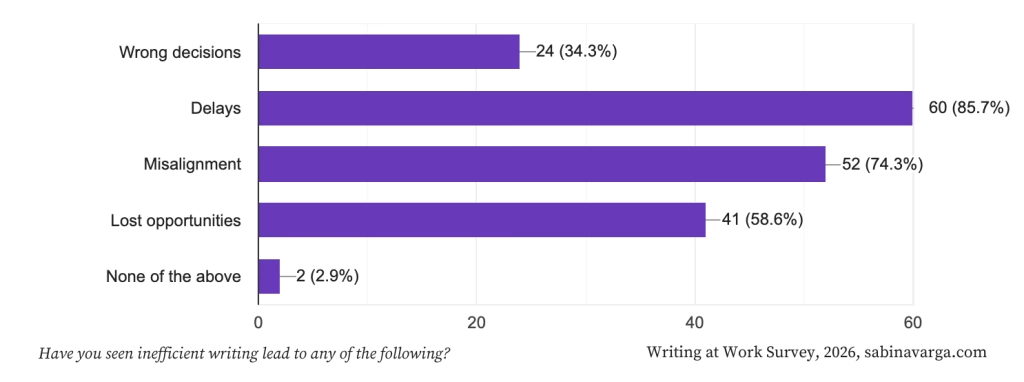
When asked whether they had seen inefficient writing cause specific business outcomes, respondents reported:
- Delays: 85.7%
- Misalignment between people or teams: 74.3%
- Lost opportunities: 58.6%
- Wrong decisions: 34.3%
A further 53% report that a significant part of their work involves interpreting what other people meant.
Writing drives business performance
Of all the statements tested, one drew the most consistent agreement. Asked whether good writing can improve business performance, 87.3% of respondents agreed or strongly agreed, including 54.9% who selected the strongest option on the scale. Only one respondent disagreed.
This finding is nearly unanimous among an experienced, multi-industry sample. Writing quality is perceived as strongly influencing outcomes.
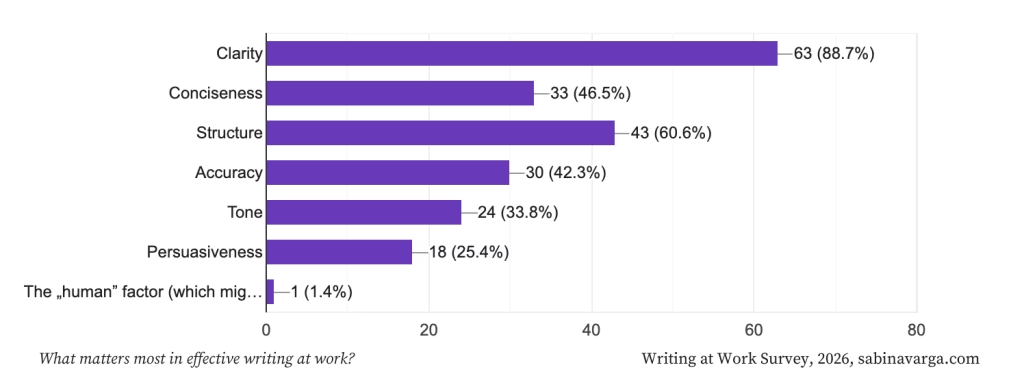
Respondents were also clear about what drives positive outcomes. Asked what matters most in effective writing at work, they ranked the qualities as follows:
- clarity: 88.7%
- structure: 60.6%
- conciseness: 46.5%
- accuracy: 42.3%
- tone: 33.8%
- persuasiveness: 25.4%
The importance of clarity is almost consensual, chosen by nearly 9 in 10 respondents. Structure and conciseness, the mechanisms that make clarity possible, follow close behind. Persuasiveness, often treated as essential in business writing, comes last. I suspect respondents view it as a downstream effect rather than the starting point.
There’s a twist, though. While professionals broadly agree on what makes writing effective at work, they report a lack of standards at the team level.
Standards gap: No shared definition of good writing
If writing affects business outcomes, the next problem is that there’s little guidance on what constitutes good writing.
Approximately 80% of respondents agree or strongly agree with the statement “Most teams don’t have clear standards for what good writing looks like”.
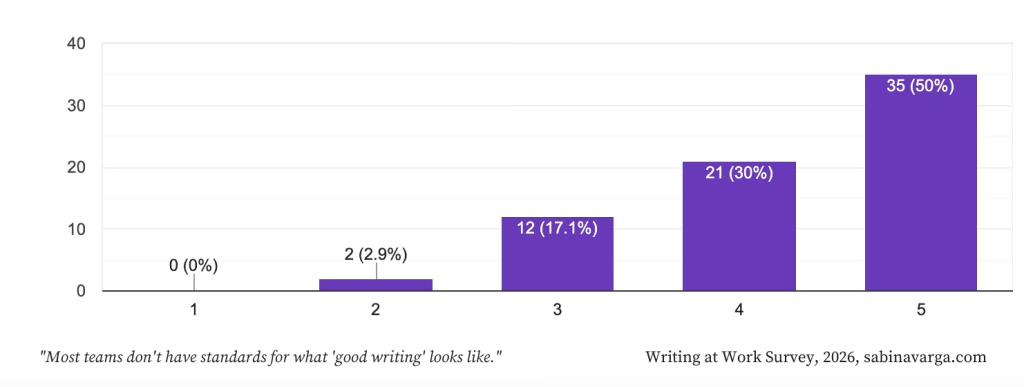
Two related data points help explain why. First, 63.4% of respondents learned to write primarily on the job, and 62.0% describe themselves as self-taught. Only 18.3% have ever taken a writing course.
Workplace writing standards, in other words, are inherited rather than taught. Each professional brings their own internal framework (or lack thereof), calibrated to whatever previous environment they came from. Without on-the-job training or guidance, confusion ensues.
Second, when asked what they would most like to improve, respondents named:
- structure (47.9%)
- persuasion (43.7%)
- confidence (38.0%)
- clarity (35.2%)
- conciseness (29.6%)
- editing (25.4%)
All these skills require a well-defined, ideally shared, frame of reference to develop.
AI writing: Impact and confidence levels
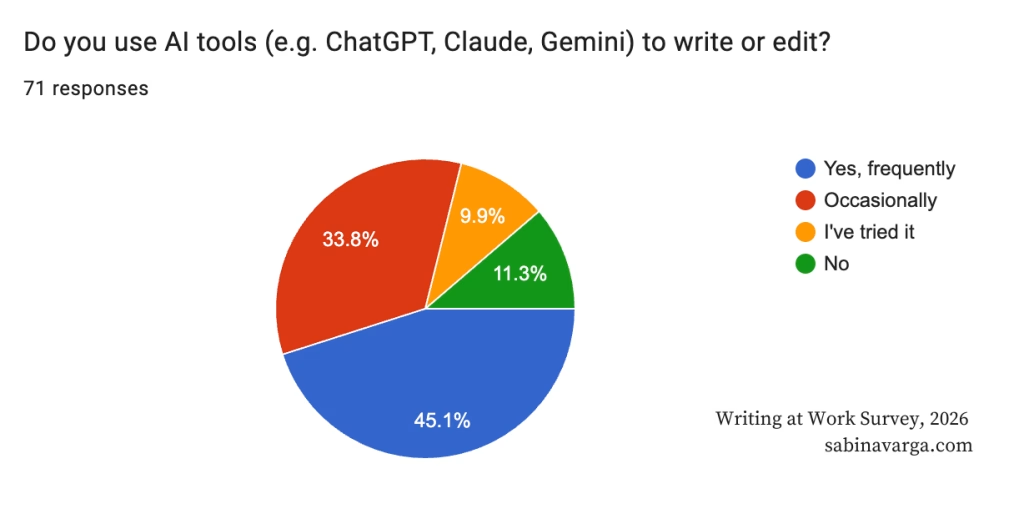
Almost 79% percent of respondents now regularly use AI tools to write or edit at work, with 45% using them frequently. ChatGPT is the default (mentioned by 57.8% of those who named a tool), followed by Claude (25.0%), Gemini (15.6%), and Copilot (14.1%). Many respondents use more than one.
The reported effects are mixed, with speed and structure emerging as the main benefits of using AI for writing:
- 44.1% say they write faster
- 41.2% say their writing is more structured
- 27.9% say they rely on AI more than they would like
- 26.5% say their writing sounds more generic
- 25.0% say they spend too much time editing AI output
- 20.6% say their writing is clearer
- 19.1% say their writing sounds more confident or credible
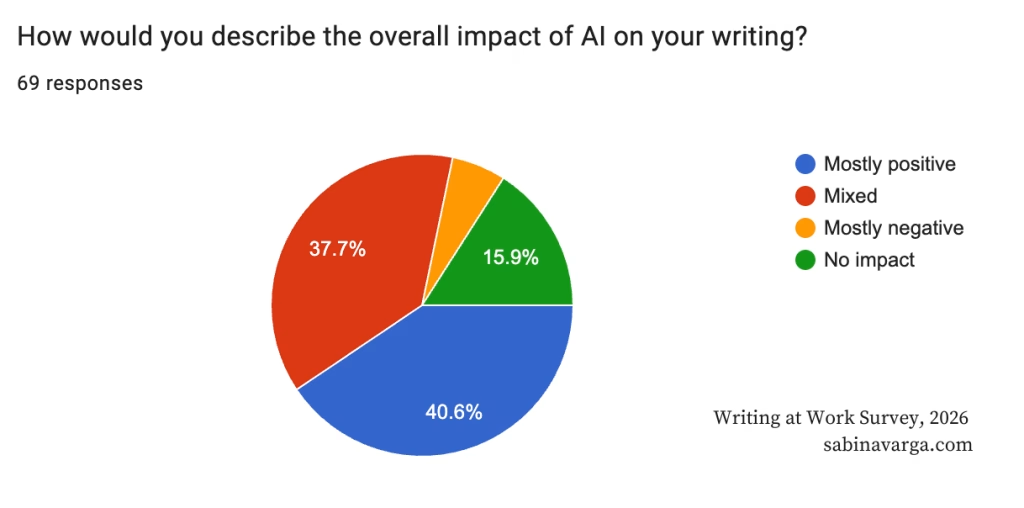
When asked to summarise the overall impact of AI on their writing, 40.6% described it as mostly positive, 37.7% as mixed, 15.9% as no impact, and 5.8% as mostly negative.
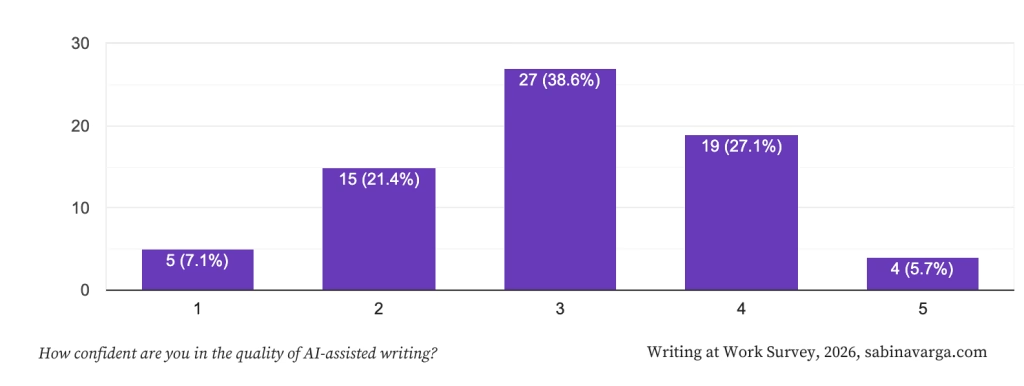
Asked to rate their confidence in the quality of AI-assisted writing on a 1–5 scale, the average came in at 3.03. Only a third rated their confidence at 4 or 5.
In conclusion, AI can help you write, but it won’t make you credible. Which, perhaps, is explained by the next finding.
Readers dislike artificial polish
The survey asked what frustrates respondents most in other people’s writing. The top two answers, tied at 47%, were “poorly structured” and “feels over-polished or artificial.” Vague writing (44.3%), writing that does not get to the point (42.9%), and writing that is too long (34.3%) followed close behind.
That tie is somewhat ironic. Professionals dislike sloppy writing and over-engineered writing in equal measure. So, polish doesn’t necessarily make writing better, especially if people suspect it’s done by AI. People want well-structured substance.
“The shift toward exclusively AI-written emails has stripped away the personal touch,” one respondent explained.
Another, working in marketing, described being asked by executives to edit AI drafts “so it doesn’t sound like AI”, a rework loop that only creates an editing burden, without adding much value.
Writing at work conclusions
As a content strategist, these are my main takeaways from the 2026 Writing at Work survey:
For professionals, the development priorities have changed. Grammar and surface correctness, which were present in my 2020 survey, are largely solved problems, especially because of software (though, as a personal observation, people now tend to make mistakes on purpose to demonstrate humanity). According to this survey, the skills that constitute a competitive advantage these days are strong structure (without over-polish), confidence, persuasion, clarity, and concision.
For team leaders (in content, marketing, but not only), the standards gap is the most actionable finding in the survey. 80% of professionals say their team lacks a shared definition of good writing. Closing that gap can be done through written norms, examples, training, and feedback. In this way, individual writing improvements compound into team output, reducing the consequences of inefficient writing.
For executives, it’s worth keeping in mind that an overwhelming majority of senior professionals link writing quality to business performance. They also report significant time loss from inefficient written communication. Training on shared writing standards and writing efficiency is a business investment that will reduce delays and improve collaboration and decision-making.
For tool-builders, the data points to two underbuilt areas: helping writers think before they draft (structure, framing, how to get started) and supporting teams in enforcing shared standards. The current bottleneck for users is editorial judgment, with writers often commissioned to edit AI work that people don’t fully trust.
Generally, writing at work has become both more important and more automated. Automation has partly solved some problems (such as grammar and structure) but exacerbated others (such as artificial polish and the editing burden). Professionals are using the tools but are still asking for standards and a better understanding of what good writing looks like.
About the survey
This survey was designed and conducted by Sabina Varga, an independent content marketing strategist, in April 2026. Seventy-one working professionals responded to an online questionnaire distributed via social media and email.
Demographics
84% percent of respondents have 11 or more years of professional experience, and 73.3% hold specialist, manager, director, or executive roles. Industries represented include technology (26.8%), marketing and advertising (15.5%), finance (8.5%), media (7.0%), nonprofit (7.0%), creative and consulting professions, and others. The sample skews female (71.4%) and mid-career (60.6% are aged 35–44). Valid response counts vary by question because some items were optional.
Note: Findings should be interpreted as a directional signal from a senior, knowledge-work-heavy sample, not a representative reading of the broader workforce.
About the author
Sabina Varga is an independent content marketing strategist who helps organizations and professionals turn expertise into influence. She works with teams on content strategy, editorial standards, and the practical question of what good writing should look like inside a company.
- Website: https://sabinavarga.com/ | https://blacusens.ro/
- Contact: sabina@sabinavarga.com
If you quote or reference this research, a link back to the original article is appreciated.
Leave a Reply